A wine tote is not a bag. It is a divider with a bag around it.
Customized Wine Totes makes six-bottle divided totes, four-bottle tasting builds, twelve-bottle case totes, removable divider systems, sparkling and magnum formats and collapsible flat-pack totes — quoted against the bottle you actually stock.
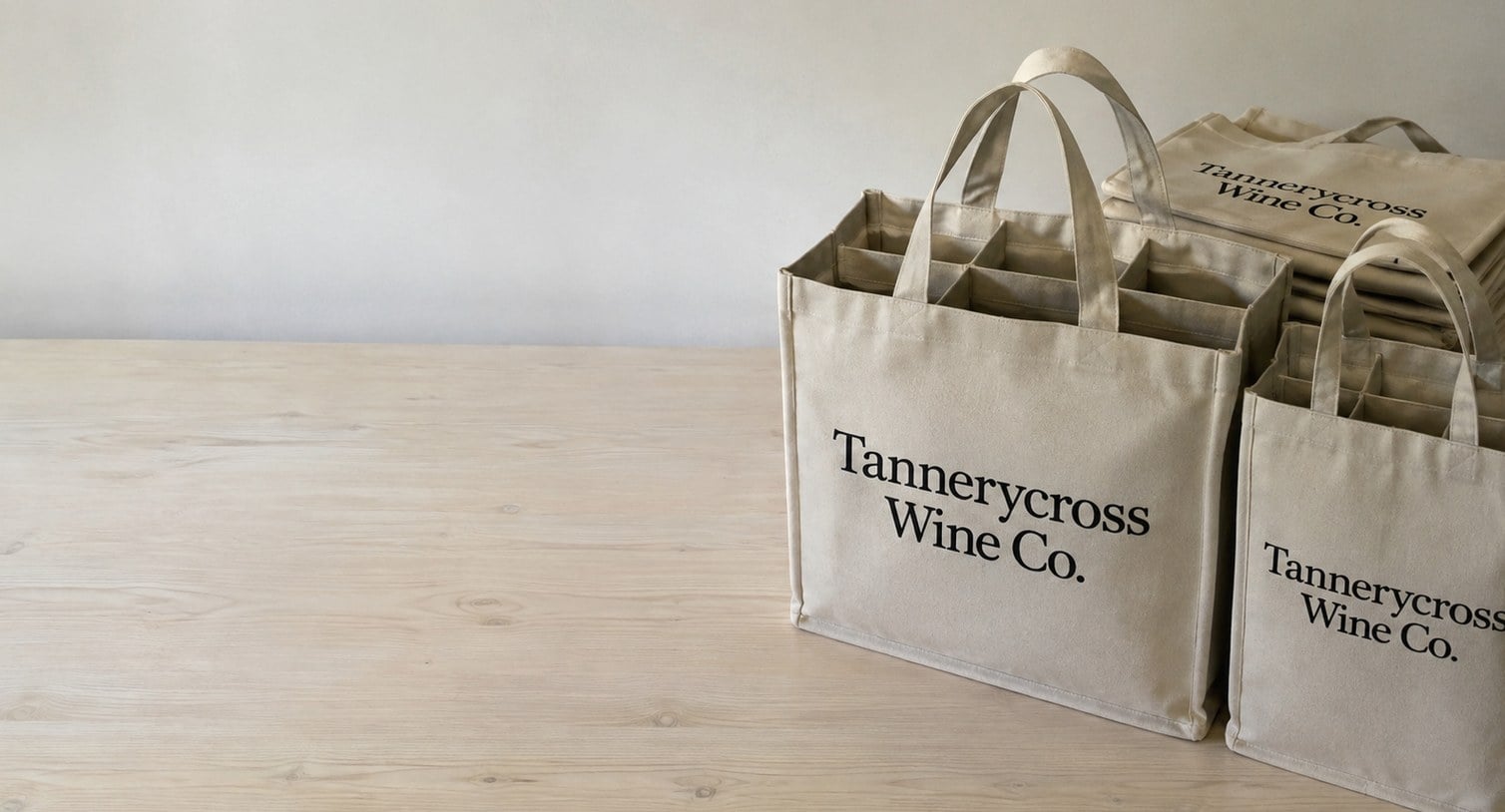
Wine totes get bought on the print. A logo, a colour, a number of bottles, done.
Then a customer walks out with a mixed six, sets it down on a stone step, and two bottles that have been leaning on each other since the counter finally meet properly.
Three numbers decide whether that happens: how wide the cells are, how tall the sides are, and what the base is made of. None of them is usually on the quote.
Why we exist
A loaded six-bottle tote is about eighteen pounds of glass leaning on itself, and the things that decide whether it arrives intact — the divider, the internal height and the base board — are the three nobody specifies.
All three are settled before anything is cut, and none of them is expensive.
Cells are cut to a bottle, not to a capacity
A Bordeaux is around 3 in across. A Burgundy is nearer 3.4. A sparkling bottle is wider again and taller at the neck.
So a six-cell insert cut for Bordeaux will not take Burgundy, and that gets discovered at the counter with a customer waiting. We ask what you stock before we quote a cell width.
Full height, or it is decoration
The shoulder is the widest part of a bottle and the part that clashes.
A half-height card insert separates the bodies and leaves the shoulders knocking together on every corner. Full-height partitions keep glass off glass from base to neck.
The base is what actually fails
A loaded tote gets set down hard on stone, tarmac and car boots dozens of times a week, and that shock goes into whichever bottle is standing on the base panel.
A reinforced board spreads it across the footprint. The drop — the gap between the bottom of the cells and the outside of the bag — keeps the glass off the ground in the first place.
Height, because bottles lever
If the sides stop at the shoulder, a bottle pivots on the rim on stairs or on a turn.
We set internal height against a named bottle, because sparkling and many Burgundy shapes are notably taller than the standard everyone quietly assumes.
The insert is a consumable
It gets soaked by a leaking cork, crushed by a bottle forced into a narrow cell, and pulled about every time the tote is emptied. It usually fails years before the bag does.
So we sell it separately and hold your cell dimensions on file. Replacing a divider should never mean replacing the tote.
What we will talk you out of
Six magnums in one tote, which nobody carries more than a few steps. A twelve where a six would do. A collapsible tote with a soft base, which folds under load and puts the bottles on the ground.
And anything we do not make: single-bottle gift sleeves, rigid presentation boxes, wooden crates, and above all insulated coolers — we make no thermal claim of any kind and we will point you elsewhere rather than imply one.
How we work
ASK
Which bottles you stock, how many, and how far people carry them.
SPEC
Cell width, internal height, base board, drop and handle length.
PROOF
Artwork on the finished panel, with the insert spec recorded.
MOCK
Free mockup within 24 hours.
SHIP
About 2 weeks, with the cell dimensions held on file for reorders.
Who we serve
Get in touch
Text or call George at (929) 605-4397, or email info@customizedwinetotes.com. Free mockups, low minimums, and a lowest-price guarantee.
Win Free Stuff
Enter below for a chance to win plus receive 10% off your first order.
🎉 You are in!
We will text you your 10% off code. Good luck!